PT-141 Peptide Nasal Spray CNS Efficacy and Mechanisms
PT-141 operates differently than conventional peripheral treatments by targeting receptors directly within the central nervous system. Clinical literature examines its function as a melanocortin receptor agonist. While some formulations are prescribed, PT-141 as a nasal spray is not FDA-approved for human use; it is sold for research purposes only.
01 — Central nervous system pathways
Traditional medications for erectile dysfunction primarily target localized vascular tissue to increase blood flow. In contrast, PT-141 functions in the brain. Researchers have extensively reviewed central nervous system agents and erectile dysfunction to understand how bypassing peripheral vessels might offer alternate therapeutic pathways.
The biological mechanisms governing arousal rely heavily on neurological signaling. When peripheral treatments fail to produce an adequate physical response, the limiting factor often resides in the neurological initiation phase rather than the vascular system. By studying central nervous system pathways, researchers identify receptors that can directly initiate arousal cascades regardless of localized vascular restrictions. The transition from peripheral to central treatment modalities represents a significant pivot in sexual health research, focusing on the brain's internal signaling networks to trigger physiological responses.
02 — Melanocortin receptor biology
The primary biological targets for PT-141 are the melanocortin receptors distributed throughout the central and peripheral nervous systems. Clinical investigations evaluate melanocortins in the treatment of male and female sexual dysfunction, identifying specific receptor subtypes that regulate neurological arousal pathways.
Melanocortins are peptide hormones that interact with a family of G-protein-coupled receptors. Among these, the melanocortin-4 receptor plays a direct role in mediating sexual behavior and metabolic processes. When an agonist binds to these specific receptor sites, it initiates a neurological cascade that translates into a physical response. This mechanism is fundamentally distinct from the nitric oxide pathways utilized by phosphodiesterase type 5 inhibitors. Understanding this distinction is crucial when comparing the central actions of PT-141 vs Melanotan II, as both interact with these peptide hormone pathways but exhibit different specificities and receptor affinities.
03 — Nasal spray clinical trials
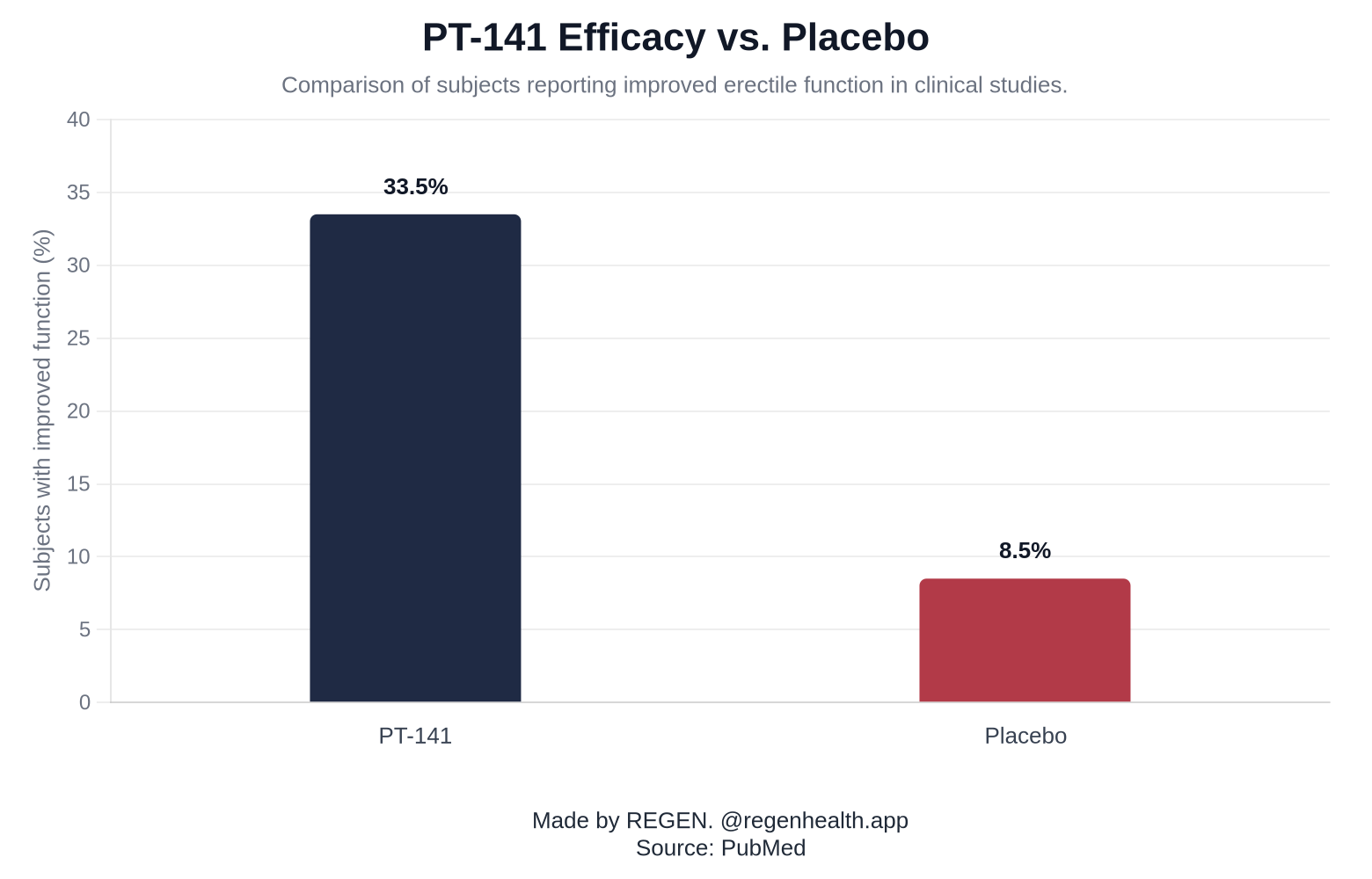
The formulation of PT-141 into an intranasal delivery method was designed to offer a non-invasive alternative to injections. Palatin completed a phase IIb clinical trial for PT-141 as a nasal spray treatment for erectile dysfunction (ED) by September 2003.
A phase IIb clinical trial specifically evaluates the efficacy of different dosage levels and begins to establish standard safety profiles in a larger patient population. Intranasal delivery requires the peptide to pass through the nasal mucosa to enter systemic circulation or directly access central nervous system pathways. This method introduces significant variables in absorption rates, as the condition of the nasal mucosa, local inflammation, and individual anatomy can alter how much of the active compound reaches the target receptors. The historical completion of these trials highlights the long-standing scientific interest in non-injectable peptide delivery systems, even when those specific formats do not ultimately reach full regulatory approval.
04 — Subcutaneous administration comparisons
Because intranasal absorption can be variable, researchers also conducted trials using injection-based delivery. One study involved the evaluation of the safety, pharmacokinetics and pharmacodynamic effects of subcutaneously administered PT-141, a melanocortin receptor agonist, in healthy male subjects and in patients with an inadequate response to Viagra.
Subcutaneous administration generally provides a more predictable absorption profile than nasal sprays, allowing researchers to measure exact systemic concentrations over time. By testing the compound in populations that did not respond adequately to traditional peripheral medications, researchers sought to isolate the central nervous system's capacity to induce arousal independently. The pharmacokinetics differ significantly between subcutaneous and intranasal routes. Pharmacodynamic measurements in these trials focus on the physiological effects observed at specific dosage thresholds, demonstrating how baseline neurological health dictates the efficacy of melanocortin agonists across varied subject groups.
05 — Physiological baselines and absorption
The efficacy of any central nervous system agent depends heavily on the individual's physiological state at the time of administration. Variations in local tissue inflammation, neurological sensitivity, and vascular health directly impact the pharmacodynamic response, explaining why fixed dosages yield differing systemic results.
Peptides acting on brain receptors require a favorable physiological environment to bind effectively. If baseline systemic inflammation is high or neurological receptor sensitivity is altered, the clinical response to a melanocortin agonist may be blunted. Delivery methods that cross mucous membranes introduce an additional layer of biological variability. Exploring related cellular repair compounds, such as BPC-157, highlights the broader scientific interest in how tissue health and baseline inflammation influence the absorption and functional efficacy of exogenous peptide therapies.
06 — Current regulatory classification
The legal and regulatory standing of bremelanotide strictly depends on its specific formulation and intended clinical indication. While certain injectable forms hold FDA approval for specific female sexual health diagnoses, PT-141 as a nasal spray is not FDA-approved for human use; it is sold for research purposes only.
Regulatory agencies classify pharmaceutical compounds based on specific delivery mechanisms and phase III clinical trial outcomes. The historical phase IIb trials for the intranasal version did not result in a commercialized, FDA-approved nasal medication for erectile dysfunction. Consequently, nasal spray formulations available today exist strictly within the research chemical domain. They are not intended for human consumption or therapeutic application. Understanding this distinction is vital, as the safety profile, purity, and dosage accuracy of research-grade materials lack the regulatory oversight applied to approved pharmaceutical therapies.
FAQ
Is PT-141 nasal spray safe?
PT-141 as a nasal spray is not FDA-approved for human use and remains restricted to research purposes. Clinical trials evaluating its safety profile as a nasal spray concluded in the early 2000s, but it was not approved for prescription use in that format, meaning current nasal formulations lack regulatory safety oversight.
How does peptide nasal spray work?
A peptide nasal spray delivers active compounds through the nasal mucosa, attempting to cross into the bloodstream or reach the central nervous system directly. This route seeks to bypass the digestive tract, though absorption rates can be heavily influenced by individual mucosal health and local inflammation.
Where can I buy PT-141?
FDA-approved injectable formulations of bremelanotide are available strictly through a doctor's prescription and fulfilled by licensed pharmacies. PT-141 nasal spray formulations are not approved for human use and are exclusively sold by laboratory suppliers for research purposes only.
How long does PT-141 take to work?
The onset of physiological effects depends heavily on the route of administration and individual pharmacokinetics. Because it acts on the central nervous system rather than local vascular tissue, the time to reach receptor saturation varies, with subcutaneous studies measuring pharmacodynamic responses over several hours following administration.