Can Clenbuterol Increase Muscle Mass: Efficacy vs Risks
Clenbuterol consistently demonstrates the ability to drive short-term protein accretion in human subjects, yet this specific tissue growth incurs a measurable metabolic penalty. Clinical evidence indicates that while users experience measurable gains in lean tissue weight, their overall cardiovascular and aerobic work capacity simultaneously declines.
01 — The metabolic cost of lean mass
Clenbuterol consistently demonstrates the ability to drive short-term protein accretion in human subjects, yet this specific tissue growth incurs a measurable metabolic penalty. Clinical evidence indicates that while individuals experience measurable gains in lean tissue weight, their overall cardiovascular and aerobic work capacity simultaneously declines.
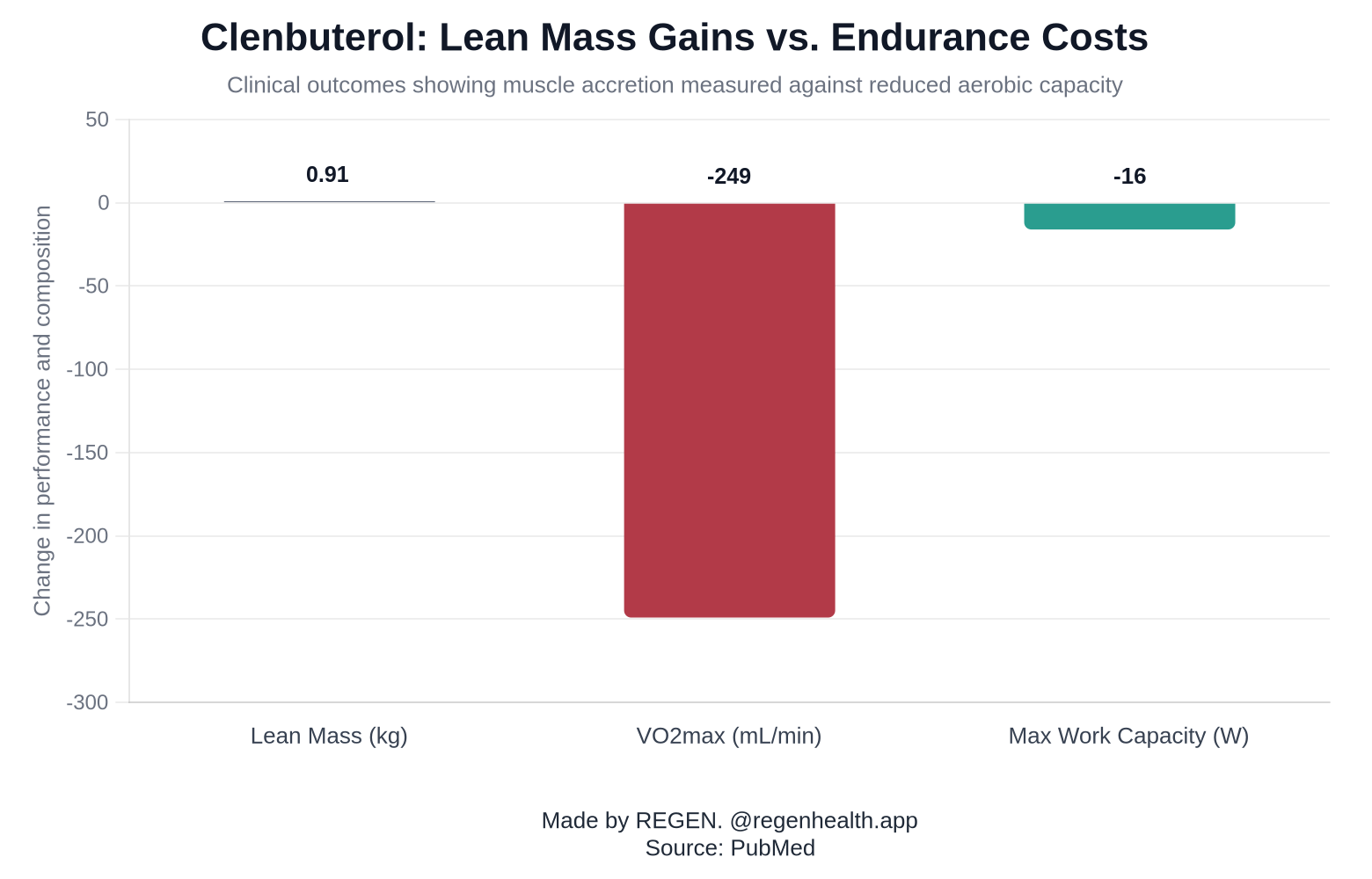
Specifically, data from a controlled trial showed that clenbuterol induced a 0.91 kg lean mass gain but simultaneously reduced maximal oxygen uptake by 7 percent and decreased exercise capacity by 4 percent. This finding illustrates the stark divergence between skeletal muscle size and functional oxidative output.
02 — Repression of mitochondrial machinery
The reduction in cardiovascular output observed with clenbuterol administration stems directly from its suppressive effects on specific mitochondrial pathways required for energy production. Rather than acting as a metabolic catalyst for endurance, the compound actively downregulates the cellular structures responsible for sustained aerobic work over extended periods.
Biomarker analysis reveals that clenbuterol repressed HAD activity and OXPHOS complex V abundance, which provides a mechanistic explanation for the decrease in oxidative capacity despite lean mass accretion. This specific repression means the newly generated lean tissue lacks the metabolic infrastructure to perform sustained work.
03 — Applications in severe muscle wasting
Medical research continues to explore the compound for severe catabolic conditions where preventing tissue breakdown takes precedence over cardiovascular endurance. In clinical settings where patients face life-threatening muscle loss, the priority shifts from functional performance to simple mass preservation and slowing the rate of physical decline associated with severe illness.
Researchers note that clenbuterol is under investigation for the management of cancer-related anorexia/cachexia due to its role in increasing muscle mass and antagonizing protein wasting. In these specific disease models, forcing protein accretion outweighs the associated mitochondrial tax, making the trade-off medically viable for specific patient populations.
04 — Clenbuterol versus anabolic steroids
Because clenbuterol affects lean tissue growth, researchers have historically questioned whether it functions as a substitute for anabolic steroids. Evaluating the two classes of compounds requires contrasting their primary mechanisms of action, their regulatory status, and the specific physiological metrics they alter during administration to understand their distinct biological footprints.
- Mechanism: clenbuterol acts as a beta-2 adrenergic agonist to drive protein synthesis; anabolic steroids act via androgen receptor binding to increase transcription.
- Clinical Application: clenbuterol is under investigation for the management of cancer-related anorexia/cachexia; anabolic steroids are approved for treating primary hypogonadism.
- Regulatory Status: clenbuterol is not FDA approved for human use and is sold for research purposes only; numerous anabolic steroids hold FDA approval for specific medical indications.
- Metabolic Impact: clenbuterol demonstrably reduces maximal oxygen uptake by 7 percent; classical anabolic agents typically preserve or augment red blood cell count and oxygen transport.
05 — Heart failure and endurance outcomes
The divergence between muscle size and physical performance becomes especially clear when researchers test the compound in populations with compromised cardiovascular function. Trials involving patients with structural heart disease reveal that forced skeletal muscle growth does not translate to improved functional capacity or physical stamina during monitored exercise testing.
Clinical evaluations demonstrate that clenbuterol increases lean muscle mass but not endurance in patients with chronic heart failure. This outcome reinforces the concept that the drug builds non-functional mass, as the newly accreted tissue fails to provide any measurable benefit to the patients during graded physical exertion tests.
06 — Evaluating the clinical trade-offs
Understanding the true physiological impact of clenbuterol requires looking past the scale and evaluating markers of metabolic efficiency and mitochondrial health. Individuals must recognize that the short-term addition of lean tissue comes at the direct expense of the cellular machinery required to sustain long-term athletic output and healthy aerobic function.
Compared to targeted recovery compounds like BPC-157 and Tesamorelin, which researchers study for localized repair and specific metabolic conditions, clenbuterol imposes a systemic oxidative tax. Users tracking physical metrics will find that the initial increase in body weight is closely mirrored by a measurable decline in their maximum aerobic work capacity.
FAQ
What do bodybuilders use to cut fat?
Bodybuilders frequently use beta-2 agonists like clenbuterol to reduce body fat, though clinical evidence shows it primarily increases lean mass while reducing cardiovascular capacity. The drug is strictly not FDA approved for human use and carries significant cardiovascular risks.
How long is Clen in your system?
Clenbuterol has an extended biological half-life of approximately 26 to 39 hours, meaning it remains active in the system for several days after a single dose. This prolonged presence increases the risk of sustained side effects such as tremors and elevated heart rate.
Does clenbuterol help with cardio?
No, clenbuterol actively harms cardiovascular performance by reducing maximal oxygen uptake by 7 percent and decreasing maximum work capacity. Clinical evidence demonstrates that it represses the mitochondrial enzymes required for sustained aerobic endurance.
Which is better for fat loss, albuterol or clenbuterol?
Clinical trials do not definitively establish one as superior for fat loss, as both act on beta-2 adrenergic receptors. However, clenbuterol possesses a significantly longer half-life, which leads to a more sustained suppression of oxidative pathways and greater metabolic strain.