Mounjaro Long Term Use ICD 10: Clinical Maintenance Data
Medical classification code Z79.85 designates the long term use of metabolic medications like Mounjaro. Clinicians use this marker when transitioning a patient from initial weight reduction into a sustained maintenance phase. This formalizes the biological reality that maintaining metabolic homeostasis requires ongoing pharmacological support to prevent weight regain.
The clinical context of Z79.85
ICD-10 code Z79.85 represents the long term use of injectable medications to manage metabolic conditions. Providers apply this classification when a patient enters a stabilization phase requiring continuous treatment. The code bridges administrative requirements with the clinical necessity of maintaining metabolic health over time.
Medical professionals view this classification as a biological commitment rather than a mere bureaucratic necessity. The administrative designation Z79.85 appears on medical charts to justify continued prescription refills to insurance carriers. However, clinical application extends beyond billing.
It serves as a physiological marker confirming that the patient has completed the initial induction phase and achieved a stable state of weight reduction. At this juncture, medical oversight shifts toward observing persistent improvements in fasting insulin, lipid profiles, and cardiovascular risk factors. Without this formal designation, patients risk arbitrary medication cessation, which clinical evidence consistently shows leads to metabolic regression.
The SURMOUNT-4 maintenance data
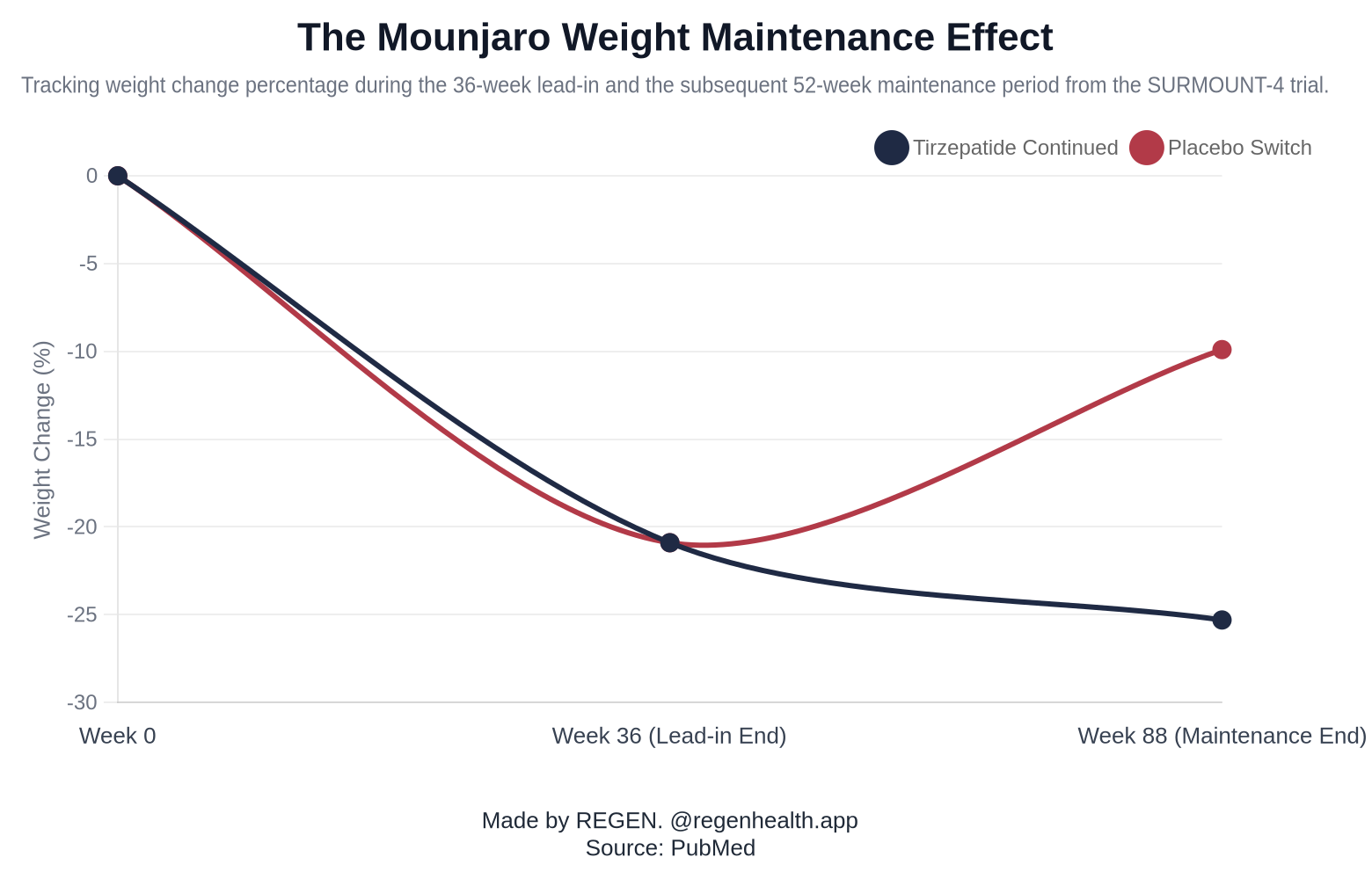
The necessity of long term use is demonstrated in the SURMOUNT-4 trial, which evaluated adults with obesity over a 52-week double-blind maintenance period. Continued treatment with tirzepatide successfully maintained initial weight reduction, whereas withdrawal led to substantial regain. This highlights the chronic nature of metabolic management.
The design of the trial included a 36-week open-label lead-in period where participants established their maximum tolerated dose. Following this induction phase, participants randomized to continue active treatment sustained their results through the subsequent year. Conversely, those switched to a placebo experienced significant increases in body mass and deteriorating cardiometabolic risk factors.
The clinical evidence solidifies the biological rationale for using chronic management codes to ensure uninterrupted pharmacological support. Maintaining stable drug serum levels over the 52 weeks prevented the rebound effect commonly observed after short term interventions.
Efficacy in type 2 diabetes
Long term administration also applies to metabolic regulation in populations with existing endocrine dysfunction. The SURMOUNT-2 trial assessed tirzepatide once weekly for the treatment of obesity in people with type 2 diabetes.
The clinical findings emphasize that metabolic dysregulation requires persistent intervention similar to managing hypertension. When patients with concurrent diabetes enter the stabilization period, clinicians utilize the specific billing codes to maintain access to the medication.
Routine monitoring of HbA1c and homeostatic model assessment for insulin resistance ensures the chosen maintenance dose remains effective over the lifespan of the treatment.
Evaluating sleep apnea outcomes
Extending beyond glycemic control, clinical investigators are assessing how sustained weight maintenance impacts secondary metabolic conditions. Recent research specifically investigated tirzepatide for the treatment of obstructive sleep apnea and obesity. Managing sleep architecture often requires the same chronic pharmacological support as primary weight regulation protocols.
Obstructive sleep apnea exacerbates metabolic syndrome by increasing nocturnal cortisol levels and sympathetic nervous system activation. The trial data indicates that the physical reduction in visceral and pharyngeal adipose tissue directly correlates with the continuous presence of the peptide.
Treating the structural causes of airway obstruction relies heavily on ongoing treatment protocols utilized for pure weight management. Providers tracking respiratory outcomes depend on extended prescriptions to guarantee that these anatomical improvements endure beyond the initial weeks of therapy.
Regional clinical trial outcomes
Global trials reinforce the consistency of these maintenance requirements across different demographics. The SURMOUNT-CN randomized clinical trial evaluated tirzepatide for weight reduction in Chinese adults with obesity. The findings align with global data emphasizing the necessity of structured, long term pharmacological support to sustain metabolic improvements.
The demographic analysis within the Chinese cohort confirms that the physiological response to GIP and GLP-1 receptor activation is uniform across different populations. Genetic variations in body composition and baseline metabolic rates do not alter the fundamental biological reality of weight regain following drug withdrawal.
Clinical protocols globally recognize that metabolic dysfunction operates as a chronic disease state requiring persistent intervention. This universal data validates the widespread adoption of specific maintenance tracking codes to prevent relapses into insulin resistance across varied clinical settings.
Biomarker stability over time
During the extended maintenance phase, clinical focus transitions from gross body weight to specialized metabolic biomarkers. Preserving these markers often involves tracking the cardiovascular endpoints seen in related GLP-1 receptor agonists. For context, the SELECT trial: semaglutide's cardiovascular benefit extends to kidney outcomes for chronic patients.
While tirzepatide targets dual receptors, the principle of sustained biological protection mirrors other therapies in the class. Wegovy and Ozempic are the same molecule, different doses, yet both similarly require chronic administration to uphold efficacy over years.
Clinicians assess fasting glucose and lean muscle preservation to verify that the ongoing protocol effectively sustains total metabolic homeostasis. Recognizing these clinical milestones allows patients and providers to focus on lasting physiological stability rather than transient numerical changes on a scale.
Frequently asked questions
What diagnosis code covers Mounjaro?
Clinicians use condition-specific primary codes like E11.9 for Type 2 diabetes without complications, often paired with Z79.85 to indicate long-term medication use during the maintenance phase.
What is the ICD-10 code for long-term medication use?
The specific ICD-10 code is Z79.85, which designates the long-term use of injectable non-insulin antidiabetic drugs.
What is the ICD-10 code for long term use of GLP 1?
Providers utilize Z79.85 to document the chronic administration of GLP-1 and dual GIP/GLP-1 receptor agonists when continuing treatment for metabolic conditions.
Can you take berberine with mounjaro?
Combining berberine with prescription GLP-1 medications requires strict clinical oversight, as both agents lower blood glucose levels and concurrent use increases the risk of hypoglycemia.