GLP-1 Receptor Agonists: Metabolic Superiority of CagriSema
GLP-1 receptor agonists are shifting from monotherapies toward dual-targeting compounds that activate multiple pathways simultaneously. By combining semaglutide and cagrilintide, CagriSema exerts synergistic effects on metabolic regulation and systemic satiety.
The shift to dual-target compounds
The introduction of dual-agonist therapies marks a transition from singular incretin targeting to combined hormonal signaling. GLP-1 receptor agonists function by delaying gastric emptying and acting on specific hypothalamic receptors to increase systemic satiety. A comprehensive review emphasizes the expanding role of these agents in clinical obesity management by pairing them with complementary metabolic pathways.
By combining a GLP-1 analog with an amylin analog, researchers aim to overcome the physiological plateau often observed in standard monotherapy protocols. Amylin, a peptide hormone co-secreted with insulin by pancreatic beta cells, naturally regulates postprandial glucose excursions and inhibits glucagon secretion. Administering its exogenous analog adds another distinct layer of satiety signaling, amplifying the total metabolic response without necessitating an increase in the primary GLP-1 dosage.
Clinical trial parameters for CagriSema
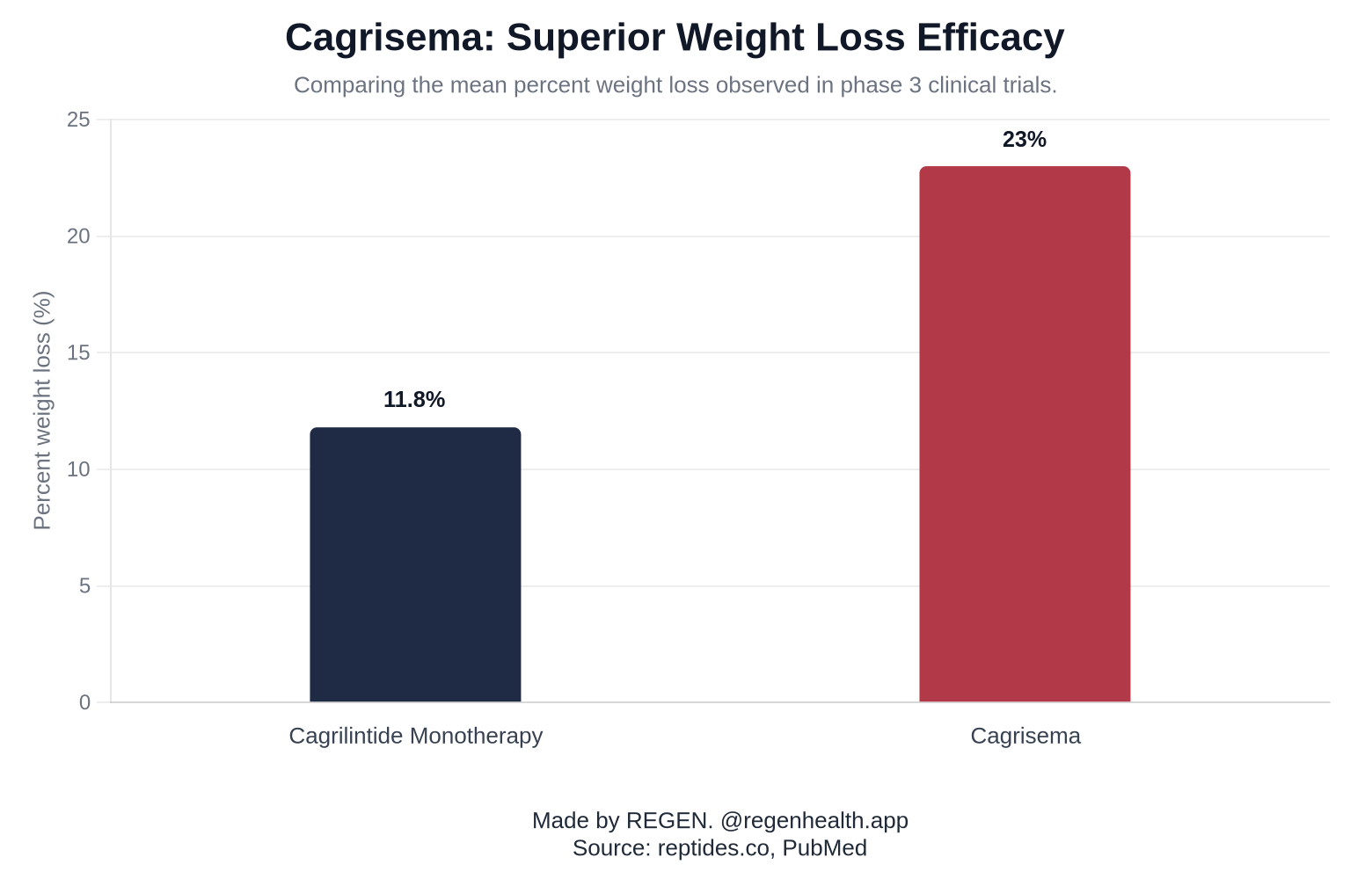
CagriSema integrates semaglutide with cagrilintide to measure synergistic effects on weight reduction and specific metabolic markers. In a phase 3a trial, CagriSema (semaglutide 2.4 mg and cagrilintide 2.4 mg) was evaluated in 3417 adults to assess weight loss superiority compared to semaglutide alone, cagrilintide alone, or placebo. This large-scale cohort provides rigorous clinical data on whether concurrent amylin and GLP-1 receptor activation significantly outperforms individual administration in a controlled environment.
In addition, completed phase 2 trials on incretin-based therapies, including CagriSema, showed a mean percent weight loss ranging from 7.4% to 24.2%. These quantitative metrics indicate a highly robust physiological response when multiple satiety pathways are engaged simultaneously, suggesting that dual-agonists represent a measurable step forward in clinical efficacy compared to their single-target predecessors.
Tracking metabolic biomarkers
Evaluating the efficacy of next-generation agonists requires monitoring specific metabolic biomarkers rather than relying solely on scale measurements. Individuals with high baseline insulin resistance typically exhibit the most distinct physiological shifts when transitioning from traditional monotherapies to dual-agonist protocols. Monitoring HOMA-IR, fasting insulin, and serum leptin levels provides concrete data on how a compound influences systemic metabolism over time.
Leptin, a hormone synthesized by adipocytes, correlates directly with adipose tissue mass and heavily modulates energy balance at the hypothalamic level. In states of metabolic dysfunction, elevated leptin levels indicate a resistance to its satiety-inducing signals. Significant reductions in serum leptin often precede sustained body mass reduction, signaling a restoration of hormonal sensitivity. Mapping the percentage of weight lost against these specific biomarker trends clarifies whether a given therapeutic approach effectively addresses underlying metabolic dysfunction or if a plateau is imminent.
Managing 168-hour dosing cycles
The pharmacokinetics of modern incretin and amylin analogs typically dictate a once-weekly administration schedule. These standard regimens operate on 168-hour dosing cycles, requiring continuous evaluation of physiological responses across the entire period. Because the half-life of these compounds spans several days, serum concentrations gradually reach a steady state after multiple doses, rather than creating severe daily peaks and troughs.
Assessing fasting glucose and fasting insulin levels at consistent intervals within this 168-hour window helps map individual metabolic response trajectories accurately. Recognizing how these specific markers fluctuate between doses provides insight into whether the current therapeutic load adequately suppresses appetite and regulates postprandial glucose throughout the full weekly cycle. Patients and clinicians must understand that standardizing the testing window relative to the injection time is critical for generating reliable biomarker data.
Systemic efficacy and cardiovascular markers
Beyond glycemic control and weight reduction, clinical investigations increasingly focus on the systemic and cardiovascular implications of sustained GLP-1 receptor activation. Systematic reviews of randomized controlled trials detail the efficacy and safety of GLP-1 monotherapies for weight reduction in populations without diabetes, validating their physiological utility entirely outside of strictly hyperglycemic environments.
Subsequent large-scale cardiovascular outcome trials have established broader physiological protections for these patient populations. For instance, data from the SELECT trial: semaglutide's cardiovascular benefit extends to kidney outcomes, demonstrating that modulating incretin pathways yields secondary end-organ protections that preserve long-term renal function. Addressing these interconnected systemic variables, rather than focusing exclusively on adipose tissue reduction, remains a primary objective in the continued development and evaluation of advanced combination therapies like CagriSema.
Administration and protocol variables
While pre-filled administration devices are standard in late-stage clinical trials and commercial distribution, early-phase research and specific compounded formulations sometimes require manual preparation. For clinical researchers and patients handling lyophilized compounds in specific supervised settings, understanding the precise volumetric requirements is strictly necessary to maintain accurate and safe dosing.
Maintaining this accuracy involves managing the Reconstitution math, without the anxiety, ensuring that the final liquid concentration perfectly matches the prescribed weekly protocol limits. The structural stability of a dual-agonist formulation depends on exact adherence to temperature, storage, and handling guidelines. Any significant deviations in preparation can compromise the molecular integrity of both the semaglutide and cagrilintide peptides prior to administration, thereby altering the expected pharmacokinetic profile and dampening the intended metabolic effect.
Frequently asked questions
What are the top 3 GLP-1 drugs?
The top three GLP-1 drugs prescribed for metabolic management typically include semaglutide, dulaglutide, and liraglutide. These medications vary in their half-lives and administration frequencies, but all function by mimicking endogenous incretin hormones to regulate glucose and appetite.
What are some examples of GLP-1 receptor agonists?
Examples of GLP-1 receptor agonists include semaglutide, liraglutide, dulaglutide, and exenatide. They are utilized in clinical settings to manage metabolic conditions by slowing gastric emptying and stimulating insulin secretion in response to meals.
Is GLP-1 safer than metformin?
GLP-1 receptor agonists are not universally safer than metformin, as safety depends on an individual's specific medical history and metabolic baseline. While metformin has decades of safety data and primarily causes gastrointestinal upset, GLP-1 medications carry different risk profiles, including potential gallbladder issues and distinct gastrointestinal side effects.
Is GLP-1 the same as Ozempic?
GLP-1 is a naturally occurring incretin hormone in the human body, whereas Ozempic is a specific brand name for semaglutide, a medication designed to mimic that hormone. While Ozempic acts on the GLP-1 receptors, the two terms describe the physiological target and the pharmaceutical product, respectively.