Growth Hormone Injection: Weekly Lonapegsomatropin Efficacy
Moving from daily somatropin to weekly lonapegsomatropin replaces a pulsatile, pituitary-mimicking profile with a sustained-release mechanism that fundamentally alters metabolic baselines. While clinical data demonstrates superior height velocity and measurable improvements in body composition, the extended biological half-life introduces the risk of transient severe hyperglycemia. Integrating this therapy demands rigorous tracking of fasting glucose alongside lean mass markers to balance physical changes with metabolic stability.
01 — Standard somatropin kinetics
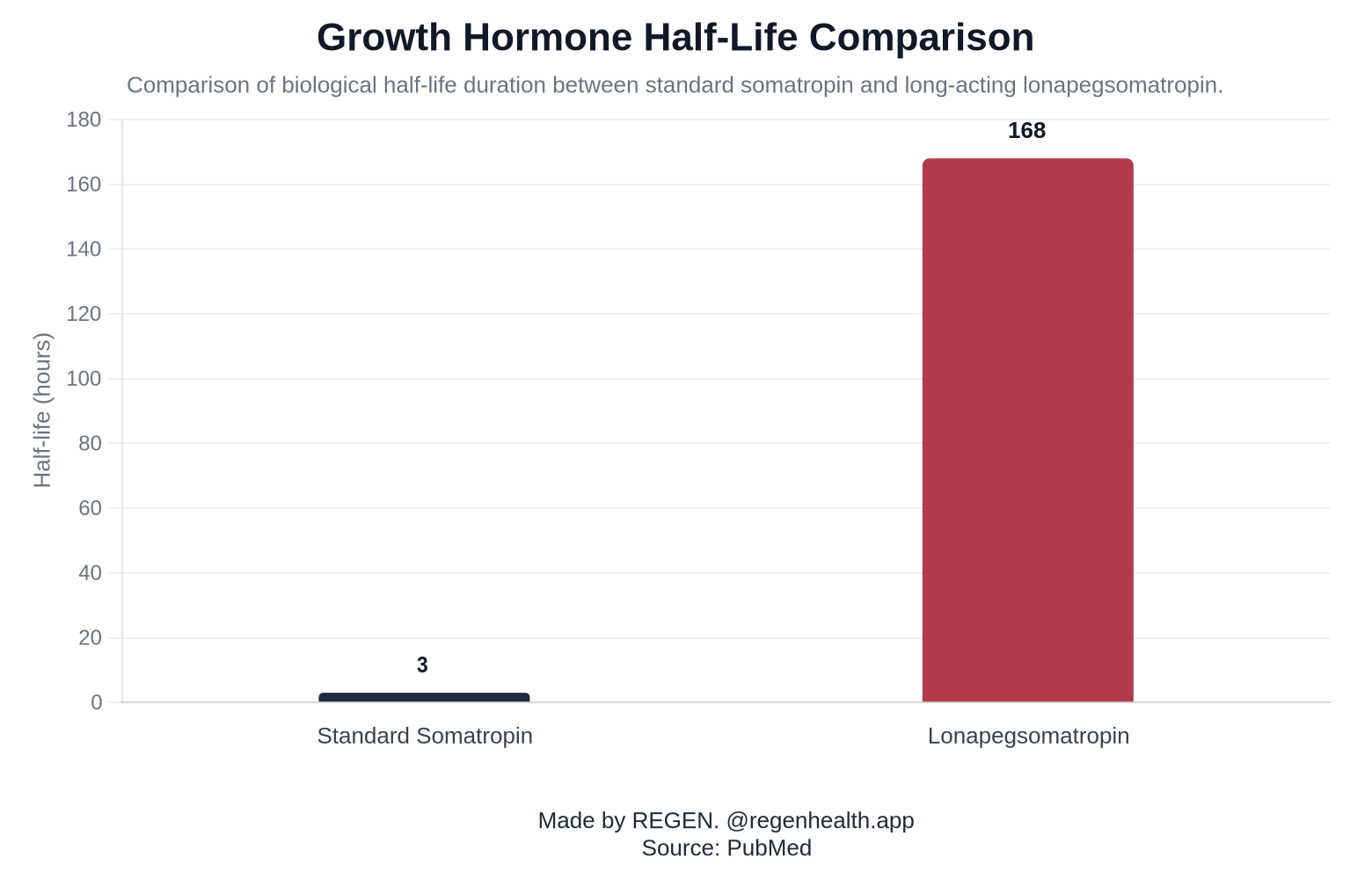
The biological half-life of standard somatropin is only 2-3 hours, requiring frequent daily administrations that mimic natural pituitary pulses. Lonapegsomatropin is a long-acting prodrug formulation of somatropin designed for once-weekly administration. By attaching a methoxypolyethylene glycol carrier to the growth hormone molecule, it achieves a sustained pharmacokinetic profile that steadily releases the active hormone over a full week.
This continuous exposure diverges significantly from the transient peaks and troughs observed with daily formulations. Assessing the pharmacokinetic/pharmacodynamic considerations of this shift reveals that replacing daily spikes with a steady week-long elevation alters fundamental tissue exposure parameters.
02 — The phase 3 heiGHt trial
In clinical observations, weekly lonapegsomatropin demonstrated superior height velocity compared to daily somatropin in a 52-week trial (n=161). The phase 3 heiGHt trial established the clinical efficacy of this sustained-release profile for treatment-naive pediatric patients. Subjects receiving the weekly formulation achieved a significantly higher annualized height velocity than those on the daily comparator.
This trial formed the primary clinical basis for evaluating lonapegsomatropin in the treatment of growth hormone deficiency in pediatric patients. The administrative shift proved successful for linear growth, establishing weekly administration as a biologically active alternative to daily injections.
03 — Lean mass and adiposity changes
Clinical data tracking body composition showed that weekly lonapegsomatropin reduced trunk fat and increased lean mass over 38 weeks. Beyond linear growth, the sustained elevation of growth hormone exerts pronounced effects on body composition. The constant presence of the hormone alters lipid metabolism and protein synthesis more continuously than pulsatile delivery.
Researchers observed measurable reductions in central adiposity alongside gains in lean body mass over the observation period. These body composition shifts mirror mechanisms observed in other metabolic interventions, such as therapies utilizing Tesamorelin for localized fat reduction, though the sustained nature of lonapegsomatropin creates a distinct physiological environment.
04 — Constant exposure metabolic burden
The continuous delivery of growth hormone alters systemic insulin sensitivity, forcing a metabolic adjustment that pulsatile daily injections often avoid. Growth hormone is fundamentally counter-regulatory to insulin. A sustained-release mechanism means peripheral tissues experience constant exposure without the physiological rest periods natural pulsatility provides.
This continuous exposure can prompt a compensatory metabolic state where basal glucose levels rise. The shift necessitates careful monitoring of metabolic biomarkers to ensure the altered steady state does not deteriorate into pathological insulin resistance.
05 — Documented hyperglycemia risks
Weekly lonapegsomatropin has been documented to cause severe transient hyperglycemia in a child with obesity. The sustained exposure to growth hormone can overwhelm the body's compensatory insulin production, leading to acute spikes in blood glucose.
Case reports document episodes of significant hyperglycemia directly following the initiation of weekly therapy, particularly in patients with pre-existing metabolic vulnerabilities. Tracking fasting glucose and HbA1c is a clinical requirement to monitor this specific metabolic shift and prevent severe glycemic dysregulation.
06 — Endogenous versus exogenous pacing
The metabolic risks inherent in weekly growth hormone therapies mandate a systematic approach to blood glucose monitoring alongside physical outcome tracking. Assessing the net clinical benefit of lonapegsomatropin requires reconciling its impact on lean body mass against its potential for glycemic disruption.
A successful therapeutic application balances the physiological benefits of extended receptor activation with rigorous defense against metabolic side effects. While secretagogues like Ipamorelin maintain endogenous pulsatility, exogenous sustained-release analogs like lonapegsomatropin require continuous vigilance of fasting metabolic panels.
FAQ
Do growth hormone injections actually work?
Clinical evidence confirms that they increase height velocity and alter body composition. In the phase 3 heiGHt trial, lonapegsomatropin demonstrated significant improvements in linear growth for treatment-naive pediatric patients.
What age is too late for HGH?
For linear growth, therapy is ineffective once the epiphyseal plates fuse, typically in late adolescence. However, therapy for adult-onset deficiency focuses on metabolic regulation and body composition rather than height.
What are the side effects of growth hormone shots?
Adverse effects include injection site reactions, fluid retention, joint pain, and altered insulin sensitivity. Extended-release formulations specifically carry a documented risk of severe transient hyperglycemia.
How long does an HGH shot last?
The biological half-life depends entirely on the formulation. Standard daily somatropin clears the system in 2 to 3 hours, whereas lonapegsomatropin is formulated to release steadily over an entire week.