What is Mecasermin Used For? Growth Dynamics & Hypoglycemia
Mecasermin is an exogenous, recombinant form of human insulin-like growth factor-1 (IGF-1) approved to treat pediatric patients with severe primary IGF-1 deficiency. While clinical monitoring often focuses on short-term linear growth velocity, prolonged administration significantly alters systemic glucose homeostasis and long-term stem cell mobilization dynamics.
01 — Defining severe primary deficiency
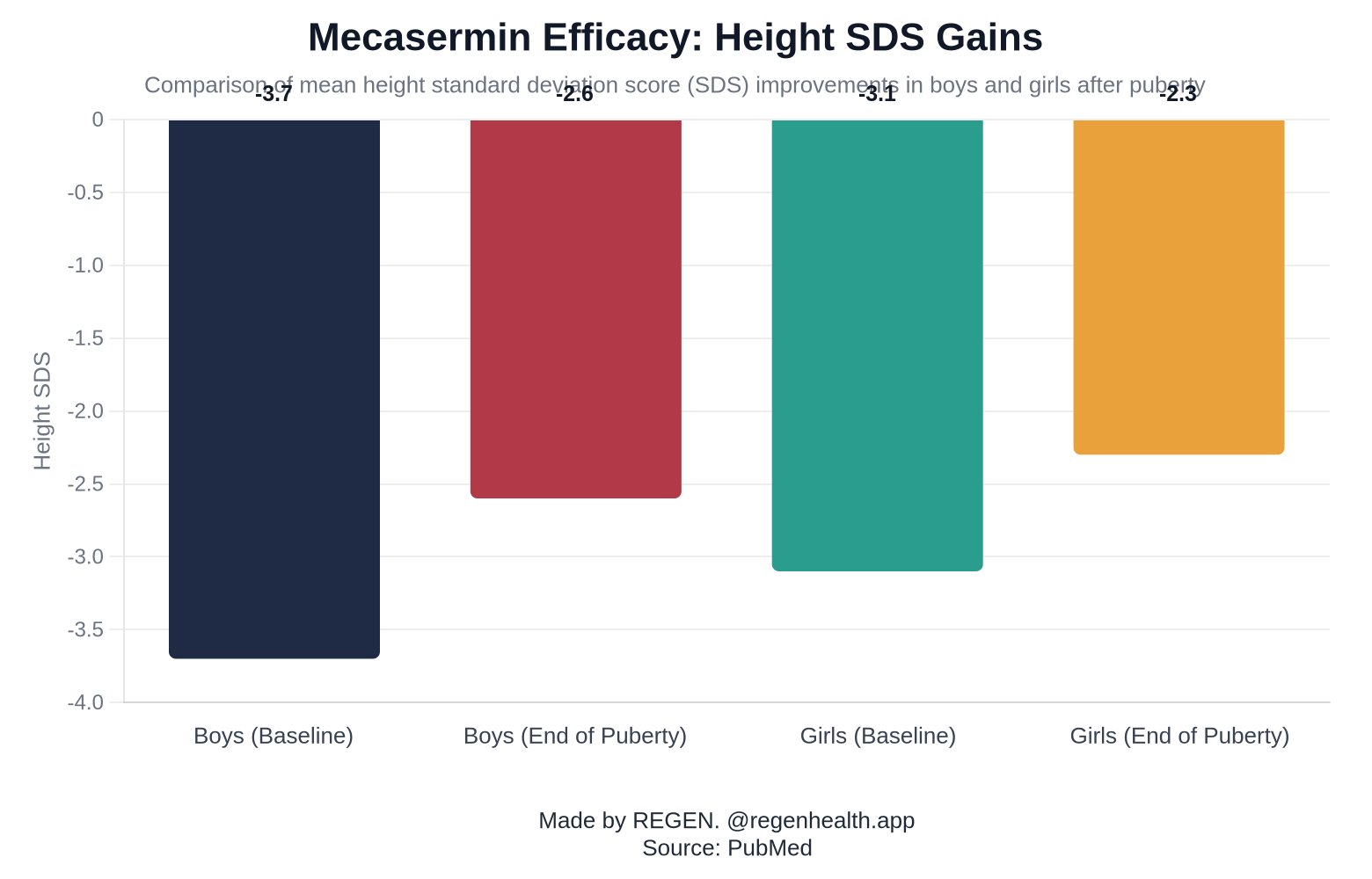
Primary IGF-1 deficiency occurs when the body fails to synthesize sufficient insulin-like growth factor-1 despite normal or even elevated growth hormone secretion. Mecasermin addresses this physiological block by supplying recombinant human IGF-1 directly to the bloodstream, bypassing the disrupted endogenous pathway. In clinical tracking, patients with severe primary IGF-1 deficiency experienced an increase in mean height SDS from -3.7 to -2.6 in boys and -3.1 to -2.3 in girls by the end of puberty while on mecasermin, demonstrating the compound's capacity to drive linear bone development over crucial developmental windows. Achieving this anatomical outcome demands precise metabolic monitoring, as the sudden influx of exogenous hormone fundamentally alters how the body utilizes available energy substrates, pivoting from baseline homeostasis into a highly demanding anabolic state.
02 — Long term height outcomes
The primary measure of therapeutic efficacy for mecasermin is the sustained improvement in linear height velocity over an extended multi-year timeframe. Rather than relying on the pulsatile nature of endogenous hormone secretion, regular administration of mecasermin delivers a constant, aggressive chemical signal to the epiphyseal plates of long bones. Longitudinal observation confirms that mecasermin treatment resulted in a statistically significant increase in body height (1.45 ± 1.06 SD; p < 0.01) and height velocity over three years, confirming that continuous exogenous IGF-1 forcibly drives the chondrocyte proliferation necessary for increasing stature. However, charting these anthropometric gains represents only one facet of the clinical protocol; practitioners must also meticulously map the corresponding biological costs associated with chemically accelerating physical maturation over a three-year period.
03 — Stem cell mobilization trade off
Accelerated macroscopic growth driven by exogenous IGF-1 imposes a distinct, measurable physiological burden on the body's circulating stem cell reserves. In their untreated state, pediatric patients with profound IGF-1 deficits often present with an unusual cellular baseline characterized by a buildup of inactive progenitor cells circulating in the peripheral blood. Research indicates that IGF-1 deficient patients demonstrated initially higher levels of VSEL and HSC stem cells compared to healthy controls, with a gradual decrease in response to 4-5 years of mecasermin therapy. This progressive decline illustrates a high-stakes metabolic trade-off: forcing the body into a sustained anabolic state to build bone and muscle tissue concurrently depletes these specific reservoirs of very small embryonic-like and hematopoietic stem cells, effectively trading cellular longevity markers for immediate structural growth.
04 — Monitoring bone density and glucose
Mecasermin's influence extends far beyond linear epiphyseal growth, initiating profound systemic changes in mineral metabolism and glucose processing. The therapeutic scope of recombinant IGF-1 research encompasses rare genetic profiles that disrupt the bioavailability of endogenous growth factors, such as mutations affecting the PAPP-A2 enzyme. Detailed evaluations of the pharmacokinetics of IGF-1 in PAPP-A2-Deficient Patients, Growth Response, and Effects on Glucose and Bone Density highlight how the medication rapidly alters skeletal turnover markers and overall systemic insulin sensitivity. Practitioners continuously evaluate these specific bone density markers alongside shifting glucose parameters to ensure the forced anabolic drive does not inadvertently compromise long-term skeletal integrity or baseline metabolic stability during prolonged pharmaceutical intervention.
05 — Hypoglycemia and metabolic risks
Exogenous administration of IGF-1 fundamentally alters the body's glycemic balance, creating a substantial risk of profound hypoglycemia throughout the duration of therapy. Introducing high concentrations of this recombinant hormone directly shifts systemic glucose processing, often requiring strict coordination with carbohydrate-dense meals to buffer sudden, dangerous drops in serum glucose levels. The metabolic principles governing these aggressive glycemic shifts also apply to other synthetic compounds targeting the somatotropic axis. For example, modified versions like IGF-1 LR3 exhibit altered half-lives that change the duration of metabolic action, while secretagogues such as Ipamorelin influence endogenous pulsatile pathways rather than directly agonizing downstream growth receptors. In mecasermin protocols, practitioners prioritize relentless blood glucose monitoring to actively mitigate the inherent metabolic dangers of continuous, high-dose therapy.
06 — Tracking longitudinal markers
Effective administration of mecasermin relies heavily on maintaining a rigorously narrow therapeutic window that maximizes linear growth velocity without chronically destabilizing systemic homeostasis. Comprehensive clinical oversight requires the continuous measurement of serum IGF-1 concentrations, precise fasting glucose-to-IGF-1 ratios, and routine bone densitometry scans to accurately quantify the physiological toll of the intervention. The overarching clinical goal is to map the progressive alterations in both structural tissue composition and finite progenitor cell reserves across a rigorous multi-year timeline. By continuously tracking these longitudinal metabolic markers, practitioners can verify that the aggressive, chemically induced acceleration of physical development does not outpace the patient's baseline physiological capacity to maintain stable glycemic control and overall health.
FAQ
What is mecasermin injection used for?
Mecasermin injection is approved to treat pediatric patients with severe primary IGF-1 deficiency, a condition where the body fails to synthesize adequate insulin-like growth factor-1 despite sufficient growth hormone production. It provides exogenous recombinant human IGF-1 to stimulate linear bone growth and cellular development.
What are the risks of taking IGF-1?
The most prominent immediate risk of exogenous IGF-1 therapy is severe hypoglycemia, resulting from the hormone's ability to forcibly drive circulating glucose into tissues. Extended use also carries risks such as tonsillar hypertrophy, increased intracranial pressure, and the progressive depletion of finite stem cell populations.
Why does mecasermin cause hypoglycemia?
Mecasermin causes hypoglycemia because its active compound, recombinant human IGF-1, structurally resembles human insulin and can directly cross-activate insulin receptors. This binding triggers an aggressive uptake of glucose from the bloodstream into skeletal muscle and adipose tissue, rapidly lowering serum glucose levels.
How expensive is INCRELEX?
INCRELEX, the brand name for mecasermin, is classified as a specialized orphan drug, and its annual cost frequently exceeds tens of thousands of dollars. The exact price varies significantly depending on the patient's weight-based dosing requirements, clinical pharmacy dispensing fees, and the specific insurance coverage pathway.