Thymosin Alpha-1 Benefits: Immune Modulation vs. Repair
Thymosin alpha-1 operates as a highly specific immunomodulator rather than a generalized physical recovery tool. While often conflated with tissue repair peptides, its clinical footprint centers on managing pathogen-induced immune dysregulation. Evaluating its utility requires cross-referencing specific inflammatory biomarkers against its established performance in targeted viral environments.
01 — Defining the immunomodulator
Thymosin alpha-1 is an endogenous peptide that governs specific lymphocyte responses. Endogenous serum thymosin alpha 1 levels are observed to fluctuate significantly across various normal and pathological conditions. This variation underscores its role in targeted immune modulation rather than generalized physical healing or systemic tissue regeneration.
Medical research isolates its function to managing severe immune dysregulation. Rather than acting as a universal anti-inflammatory agent, it provides a precise intervention for specific cellular immune environments. Monitoring these baseline levels helps separate candidates for targeted immune modulation from those experiencing standard metabolic fatigue.
Understanding this primary mechanism is essential for reviewing the clinical literature. The peptide influences the maturation and differentiation of T-cells, positioning it as a tool for targeted immune correction when specific cellular pathways fail to respond to standard physiological cues.
02 — Comparing immune and tissue peptides
Differentiating immune modulators from tissue repair peptides clarifies their specific clinical applications. Thymosin alpha-1 is actively evaluated in moderate to critical COVID-19 patients, whereas compounds like BPC-157 and TB-500 serve entirely different structural roles. Conflating these divergent mechanisms leads to misaligned expectations for systemic recovery.
A direct evaluation highlights their separate pathways. Clinical literature evaluates thymosin alpha 1 and HIV-1 to understand deep cellular immune responses. In contrast, researchers investigate physical repair peptides for musculoskeletal recovery. Both classes operate on distinct biological axes and cannot be substituted for one another.
- Mechanism: Thymosin alpha-1 modulates specific cellular immune cascades in viral disease [cite]; TB-500 handles structural physical tissue repair [cite].
- Evidence base and population: Thymosin alpha-1 is evaluated in respiratory and bloodborne viral populations [cite]; BPC-157 is primarily investigated for localized structural healing in musculoskeletal contexts [cite].
- Regulatory status: Thymosin alpha-1 is restricted as a research compound and not FDA-approved for human general use [cite]; tissue repair peptides share a similar experimental, non-approved regulatory classification [cite].
- What gets measured: Thymosin alpha-1 success is measured by virological response and specific lymphocyte counts [cite]; tissue repair interventions assess localized physical tissue regeneration [cite].
- Comparison outcome: The clinical evidence does not support a winner between the two, as they target entirely separate biological systems and neither acts as a universal recovery solution [cite].
03 — The reality in acute sepsis
Thymosin alpha-1 is not an effective intervention for all forms of severe acute inflammation. A recent multicentre, double blinded, randomised, placebo controlled, phase 3 trial showed no statistically significant mortality benefit in sepsis patients. This failure highlights the compound's highly specific scope of action.
In this extensive clinical evaluation, sepsis patients receiving the intervention experienced a 23.4 percent mortality rate, compared closely to a 24.1 percent mortality rate observed in the placebo group. This negligible difference proves that targeted immunomodulation does not universally reverse acute systemic metabolic collapse.
Sepsis involves a chaotic cascade of inflammatory markers that overwhelm specific cellular interventions. When the immune system is entirely dysregulated by such a massive acute insult, isolated lymphocyte differentiation cannot overcome the broader physiological failure. The trial confirms that the peptide is not a broad-spectrum rescue agent.
04 — Viral suppression and chronic disease
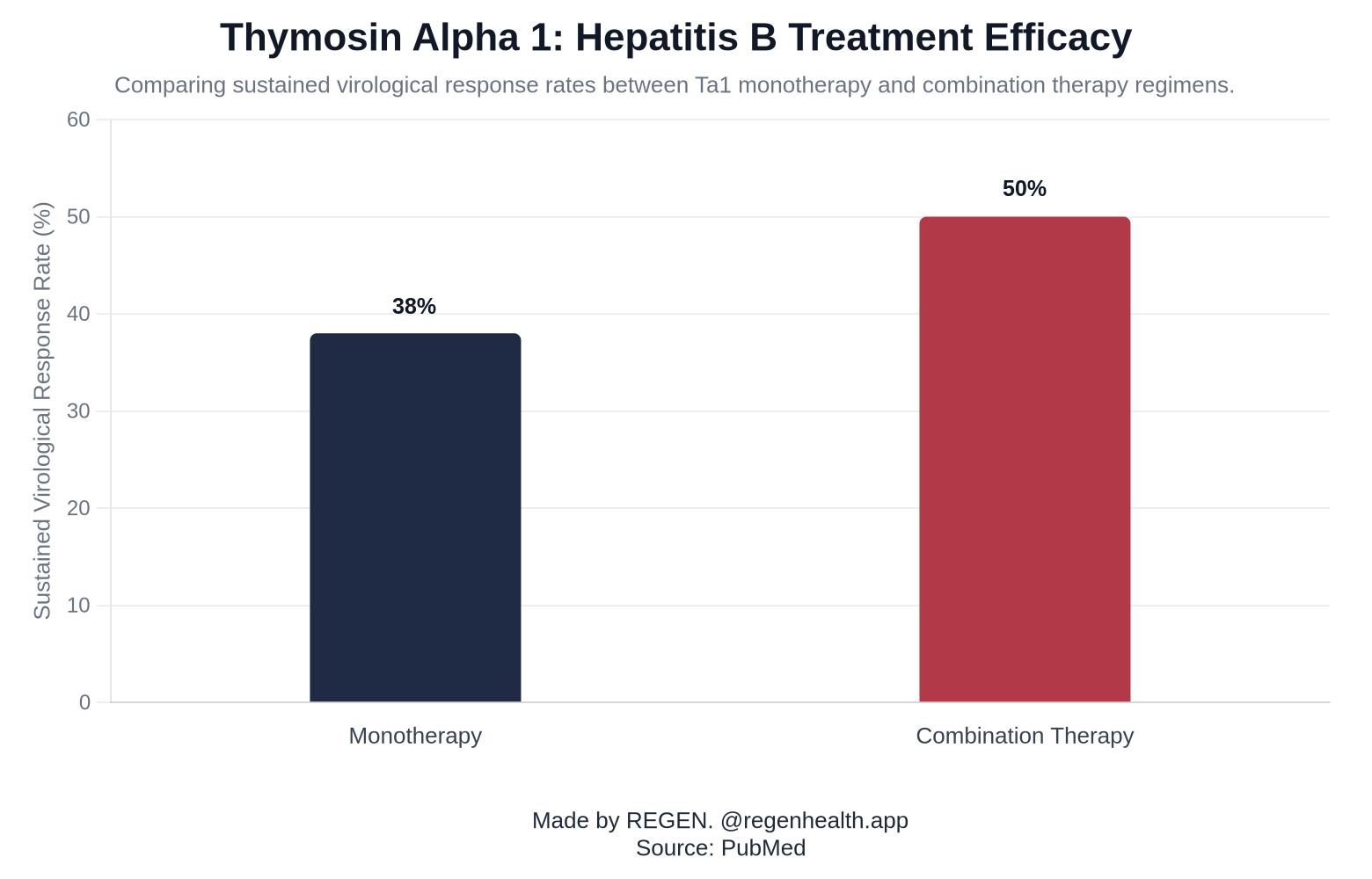
The most substantial clinical evidence for thymosin alpha-1 centers on managing chronic and acute viral infections. By focusing on specific immune subsets, it acts as a tool for restoring targeted cellular responses rather than merely suppressing generalized inflammation.
Beyond chronic retroviral applications, respiratory pathogens represent a major area of study. The targeted approach aims to correct severe immune suppression associated with the disease, demonstrating its utility in environments where specific lymphocyte activity is compromised.
These viral applications rely on the peptide's capacity to influence T-cell subsets. Managing ongoing viral loads requires precise cellular coordination, which is the primary pharmacological mechanism investigated in these highly specific patient populations.
05 — Biomarkers over blind supplementation
Deploying immunomodulators requires strict attention to clinical biomarkers rather than subjective feelings of fatigue. Tracking specific inflammatory and lymphocyte markers is the only objective method for determining when cellular immunity requires external modulation.
If systemic markers like C-reactive protein are at normal baselines but specific T-cell populations remain suppressed due to viral exposure, targeted interventions are often investigated. Blind supplementation without observing these precise cellular metrics ignores the clinical reality of how the peptide functions.
Measuring the ratio of viral load to specific immune cells provides a much clearer picture of potential efficacy. Interventions designed for viral suppression must be quantified through ongoing serological testing rather than relying on generic assessments of recovery or physical performance.
06 — Regulatory status and availability
Thymosin alpha-1 is not FDA-approved for human use as a dietary supplement or general therapeutic in the United States. It is typically sold for research purposes only, requiring researchers and clinicians to navigate its regulatory status carefully when reviewing clinical literature.
While certain countries have approved synthetic versions as an adjunct therapy for specific conditions, these approvals are highly localized and strictly regulated. The compound remains an experimental agent in many jurisdictions due to its complex mechanism of action.
Understanding this legal framework is crucial for anyone reviewing the medical evidence. The strict controls reflect the compound's potent systemic effects and the necessity of rigorous medical oversight when dealing with complex immunological pathways.
FAQ
How long does it take for thymosin alpha 1 to work?
The timeline for thymosin alpha-1 efficacy depends entirely on the specific viral or immune condition being monitored. Clinical trials measuring virological response typically observe serological markers over multiple weeks or months rather than tracking acute daily changes.
Who should not take thymosin alpha 1?
Individuals with overactive immune conditions or autoimmune disorders should avoid thymosin alpha-1, as it directly modulates immune responses. Because it alters cellular immunity, anyone not under strict medical supervision for a specific pathogen-induced deficit should avoid its use.
Can you take thymosin alpha 1 everyday?
Clinical protocols in the medical literature rarely administer thymosin alpha-1 every day. The specific dosing frequency depends heavily on the trial parameters, with researchers typically utilizing intermittent dosing schedules to modulate rather than overwhelm the immune system.
What are the side effects of thymosin alpha 1?
The side effects of thymosin alpha-1 can include localized injection site reactions, muscle discomfort, and potential immune overstimulation. Because it actively alters lymphocyte function, inappropriate use carries the risk of inducing unwanted systemic inflammatory responses.