Retatrutide Pronunciation, Mechanism, and Trial Data
Retatrutide is pronounced reh-tuh-TROO-tide. It is an experimental triple-hormone-receptor agonist currently targeting GLP-1, GIP, and glucagon receptors to drive metabolic changes. Clinical trial data shows it reduces body weight by up to 24.2 percent over 48 weeks while systematically mobilizing liver fat stores.
The correct pronunciation
Pronouncing the drug correctly involves four syllables: reh-tuh-TROO-tide. The emphasis falls heavily on the third syllable. The primary clinical relevance of the compound lies in its classification as a triple-hormone-receptor agonist currently undergoing extensive clinical evaluation for obesity and metabolic syndrome.
The chemical name designates a specific peptide sequence engineered to bind with three distinct metabolic receptors simultaneously. The addition of the glucagon receptor mechanism sets it completely apart from predecessors in the same pharmacological class. By activating the glucagon receptor, the compound initiates direct fatty acid oxidation in the liver itself. This targeted activation raises the resting energy expenditure, allowing the body to utilize more fuel continuously regardless of physical activity levels. The phonetic mechanics are simple, but the physiological cascade it triggers represents a highly complex shift in how the body manages stored energy.
The triple receptor mechanism
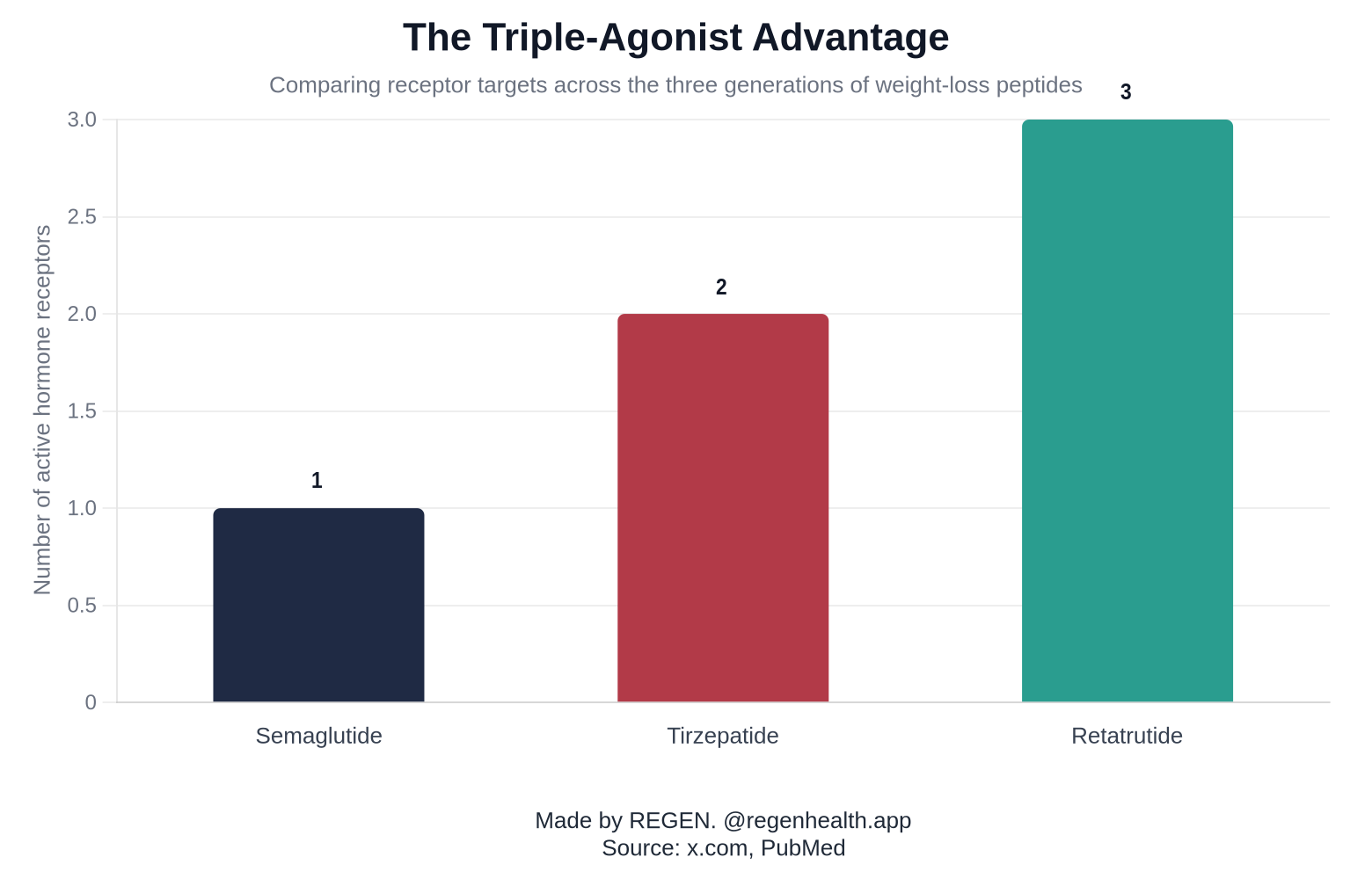
The mechanism of action relies on simultaneously activating three metabolic pathways: GLP-1, GIP, and glucagon. The combined insulin release triggered by GLP-1 and GIP offsets the standard blood-sugar-raising effect typical of glucagon activation.
The receptor count separates this compound from older medications. While a systematic review of randomized controlled trials confirms the weight loss utility of single-receptor GLP-1 agonists, newer agents add targets. Semaglutide hits one receptor. Tirzepatide added a second receptor to become a dual agonist. Retatrutide targets a third receptor to fully mobilize liver fat. The compound is designed to be highly potent at the GIP receptor, ensuring glycemic stability while the glucagon pathway oxidizes lipids. Evaluating these complex mechanisms requires looking closely at individual targets, much like examining The peptides inside the KLOW blend, individually studied for specific cellular responses.
The phase 2 weight loss trial
Clinical data shows unprecedented reductions in total body mass. In a Phase 2 trial of adults with obesity, the highest dosage group achieved an average weight loss of 24.2 percent at the 48 week mark. The reduction curve had not yet flattened when the study reached its endpoint.
The weight reduction figures establish a distinct baseline for evaluating this compound. Patients administered the 12mg dose demonstrated significant and sustained mass reduction. Obesity is a measurable physiological condition rather than an issue of willpower. A pharmacological intervention that meaningfully moves the needle on body mass index must be evaluated on the trial data. The sheer scale of the observed weight reduction necessitates careful monitoring of metabolic markers to ensure the rapid fat mobilization does not overwhelm hepatic processing capacity. Monitoring distinct hormonal responses ensures physiological changes are actually occurring safely, an approach mirroring protocols for CJC-1295 (no DAC) + Ipamorelin: the GH pulse half of the stack during metabolic interventions.
Glycemic control and liver fat
By targeting glucagon receptors located primarily in the liver, the compound forces the organ to burn its own fatty acids directly.
This compound demonstrates significant activity in glycemic control alongside its lipid oxidation properties. In a phase 2 trial conducted in the USA for people with type 2 diabetes, retatrutide operated as a GIP, GLP-1, and glucagon receptor agonist, leading to measurable improvements in blood sugar homeostasis. Activating the glucagon receptors raises resting energy expenditure, allowing the body to burn more fuel continuously. Because the peptide is highly potent at the GIP receptor, the stimulated insulin release safely offsets the expected blood-sugar-raising effect of the glucagon pathway.
Regulatory status and safety
Retatrutide has not finished Phase 3 trials and remains unavailable through standard prescription channels. It is not FDA-approved for human use; sold for research purposes only. The only fully legal route to access the drug currently is through participation in an official clinical trial.
Because the compound remains in active development, its physiological behavior past the 68 week trial mark remains unknown. The Food and Drug Administration is actively pursuing gray market vendors supplying unauthorized versions of the peptide. Evaluating a compound before full regulatory approval requires heavily weighting the available clinical data against potential unknown long term risks. The characterized safety profile from Phase 2 suggests gastrointestinal side effects similar to existing incretin therapies, but the final safety determinations await the conclusion of the larger Phase 3 population studies. Patients seeking legitimate medical interventions must rely on approved medications until this specific compound completes the required regulatory hurdles.
Biomarkers to monitor
Tracking physiological response requires a comprehensive metabolic panel. Evaluating the rapid mobilization of liver fat necessitates regular testing of hepatic enzymes like ALT and GGT. Fasting glucose and fasting insulin levels must also be quantified to confirm that the insulin release adequately offsets the glucagon activation.
The physical reduction in weight is merely a lagging indicator of systemic changes occurring at the cellular level. When the liver rapidly oxidizes fatty acids, the metabolic byproduct load increases significantly. Measuring GGT provides critical insight into biliary tract function and oxidative stress during this process. ALT indicates acute hepatocellular status and confirms the liver is processing the rapid lipid mobilization safely. Because the mechanism heavily leverages the glucagon receptor, fasting glucose monitoring ensures the delicate balance between insulin secretion and hepatic glucose output remains completely stable. Relying solely on total body mass ignores the actual biological mechanisms driving the physiological change.
Frequently asked questions
Why is retatrutide better than Ozempic?
Retatrutide targets three separate metabolic receptors instead of just one. While Ozempic only activates the GLP-1 receptor, this newer compound adds GIP and glucagon activation to drive direct fatty acid oxidation in the liver.
Why do I feel so good on retatrutide?
How can we pronounce this?
The correct pronunciation is reh-tuh-TROO-tide. The emphasis is placed firmly on the third syllable, distinguishing it from other medications in the same peptide class.
What are the potential side effects of taking retatrutide?
The most common side effects reported in clinical trials involve the gastrointestinal system, including nausea, diarrhea, and vomiting. Because the compound is still in clinical trials, its long term side effect profile past the 68 week mark remains unknown.