Orforglipron Para Que Sirve: Oral Pharmacokinetics
Orforglipron is an investigational, once-daily, non-peptide small-molecule GLP-1 receptor agonist. By shifting from a peptide structure to a small molecule, it aims to deliver systemic GLP-1 activation without the strict fasting and hydration restrictions required by current oral peptide formulations.
The structural shift to small molecules
Orforglipron is an investigational non-peptide GLP-1 receptor agonist designed for once-daily oral administration. Unlike peptide-based therapies that require specific gastrointestinal conditions to avoid enzymatic degradation, its small-molecule architecture is engineered to allow for systemic absorption independent of strict food and water fasting windows.
The transition to a small molecule fundamentally changes how the active compound enters circulation. Current oral GLP-1 options rely on absorption enhancers and require an empty stomach to achieve adequate bioavailability. A non-peptide structure aims to remove these daily logistical constraints while still agonizing the GLP-1 receptor to produce metabolic effects. When reviewing Oral vs. Injectable GLP-1s: Orforglipron Pharmacokinetics, the primary distinction lies in this ability to bypass the stomach's highly degradative environment without relying on specialized peptide carriers. This architectural change allows the active compound to enter the bloodstream consistently on a daily schedule.
Efficacy in obesity trials
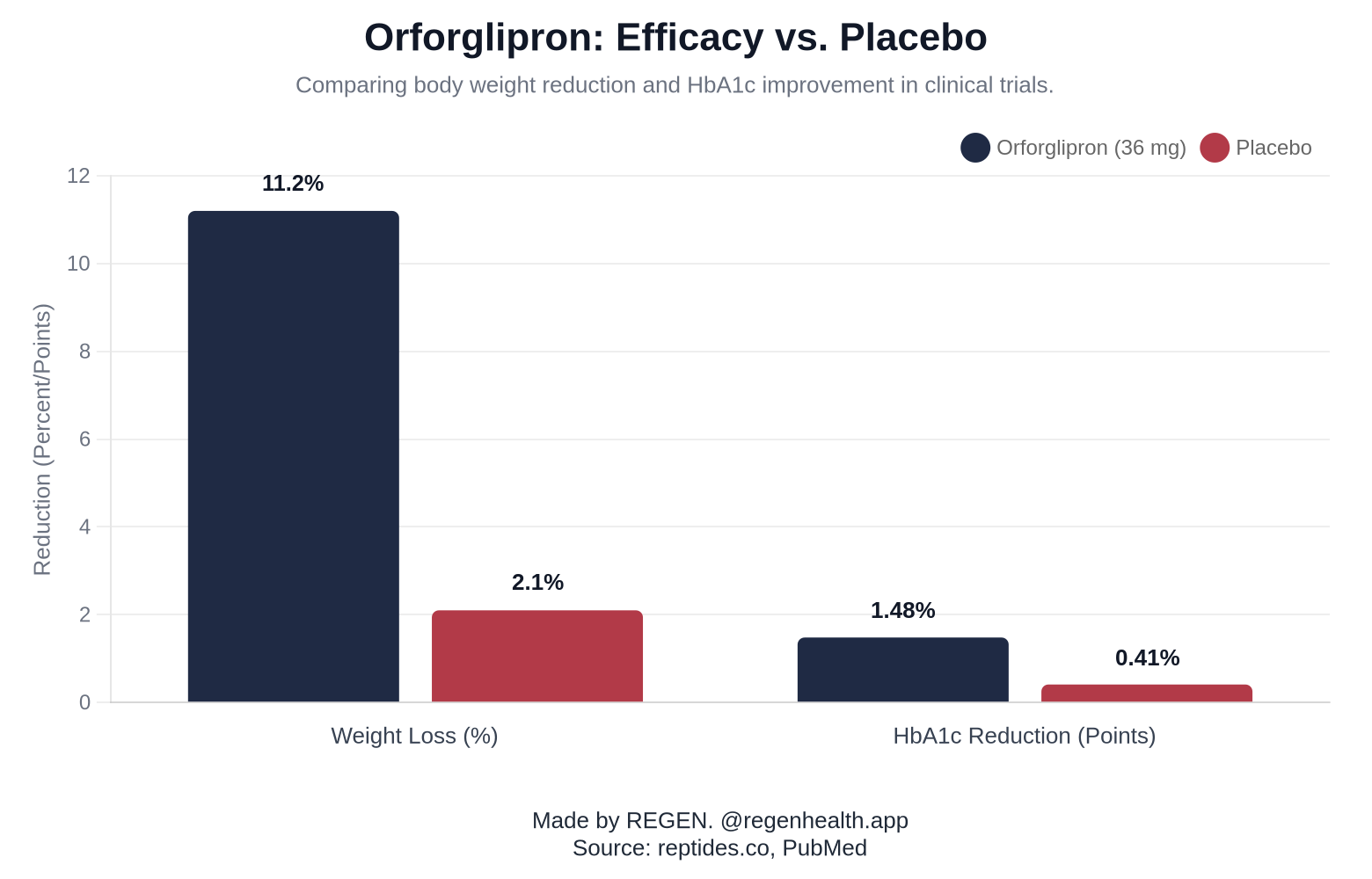
Clinical trials assessing orforglipron demonstrate substantial changes in body mass among specific populations. In patients with obesity without diabetes, once-daily orforglipron (36 mg) resulted in a mean body weight reduction of -11.2% compared to -2.1% with placebo after 72 weeks. This phase 2 trial data highlights the compound's potential to drive significant adipose tissue reduction via a daily oral route.
Beyond mean averages, individual response rates present a detailed picture of its clinical effects across the trial cohort. Among the orforglipron 36-mg group (obesity trial), 54.6% of patients achieved a body weight reduction of 10% or more, compared to 12.9% in the placebo group. These metrics indicate that more than half of the participants receiving the target dose experienced double-digit percentage weight loss, shifting the expectations for what small-molecule oral therapies can achieve in a clinical setting. Continual observation remains necessary to understand how these reductions stabilize post-trial.
Impact on glycemic control
For metabolic management in participants with type 2 diabetes, orforglipron demonstrates distinct impacts on glycemic markers independent of its weight reduction profile. In participants with type 2 diabetes, orforglipron (36 mg) achieved a mean change in HbA1c of -1.48 percentage points compared to -0.41 percentage points with placebo at 40 weeks. This reduction indicates a significant modification in systemic glucose management over the trial duration.
Monitoring HbA1c alongside lipid panels ensures that the systemic effects of GLP-1 agonism are properly contextualized during the administration period. The documented reduction in blood glucose levels indicates that the small-molecule approach effectively triggers the intended receptor responses. Sustaining these reductions requires consistent daily administration, as the pharmacokinetic half-life of an oral small molecule necessitates regular dosing to maintain therapeutic blood plasma levels over time.
The broader GLP-1 clinical context
The clinical development of orforglipron aligns with wider research into incretin-based therapies for metabolic dysfunction. Recent literature, such as the publication titled Emerging Role of GLP-1 Agonists in Obesity: A Comprehensive Review of Randomised Controlled Trials, documents that activating this receptor pathway consistently yields reductions in body mass and modifications in metabolic parameters across diverse patient populations.
Additionally, broad clinical evaluations have confirmed the findings detailed in Efficacy and Safety of Glucagon-Like Peptide-1 Receptor Agonists for Weight Loss Among Adults Without Diabetes : A Systematic Review of Randomized Controlled Trials. By introducing a non-peptide small molecule into this established drug class, researchers are evaluating whether it can replicate the clinical outcomes of injectable peptides while removing the adherence barriers associated with complex oral peptide fasting rules. This context emphasizes that the core mechanism remains validated, even as the delivery vehicle undergoes structural innovation.
Biomarker tracking during titration
Clinical application of a daily oral agonist necessitates precise monitoring of metabolic biomarkers rather than relying solely on scale weight. The scale-up period requires regular assessment of fasting insulin, HbA1c, and liver enzymes to distinguish healthy adipose tissue loss from lean mass degradation during rapid weight reduction phases.
Because systemic exposure happens daily, individual physiological baselines dictate the necessary titration schedule. Tracking body composition shifts alongside blood markers prevents aggressive dose escalation that could compromise metabolic stability. Just as tracking body composition is vital during GLP-1 therapy, monitoring distinct biomarkers is equally important when evaluating combinations like CJC-1295 (no DAC) + Ipamorelin: the GH pulse half of the stack. A data-driven approach to dosage ensures that physiological changes are mapped accurately, providing a comprehensive view of metabolic health throughout the administration period.
Regulatory and research status
Orforglipron is currently an investigational compound and is not FDA-approved for human use; it is strictly in clinical development. Clinical trials continue to evaluate its long-term safety profile, optimal dosing protocols, and metabolic outcomes in diverse participant populations prior to formal regulatory submissions.
While phase 2 results are well documented, ongoing phase 3 trials will determine its final regulatory standing and approved indications. Strict adherence to published research data, rather than anecdotal extrapolation, is required when evaluating its pharmacological profile. Until regulatory bodies complete their review of the phase 3 data, the compound remains classified as an experimental therapy, and its distribution is limited strictly to controlled clinical research environments.
Frequently asked questions
orforglipron para que sirve
Orforglipron is being researched as a daily oral treatment to lower blood glucose in type 2 diabetes and facilitate body weight reduction in obesity. It is a non-peptide small molecule that activates the GLP-1 receptor to produce these metabolic effects.
orforglipron vs tirzepatide
The primary difference is that orforglipron is a daily oral small-molecule GLP-1 agonist, while tirzepatide is a weekly injectable dual GIP and GLP-1 receptor agonist. They differ fundamentally in their administration route, molecular structure, and specific incretin receptor targets.
What are the common side effects of orforglipron?
As observed in phase 2 clinical trials, the most frequently reported side effects are gastrointestinal in nature, including nausea, constipation, and vomiting. These adverse events typically occur during the initial dose escalation phase and often stabilize over time.