Hi Tech Pharmaceuticals 1 Testosterone: Market Realities
1-testosterone is an unapproved synthetic androgen frequently sold as a prohormone supplement through a regulatory loophole. Research indicates that unregulated performance compounds carry substantial risks of contamination and unknown systemic effects. Verifiable endocrine management requires tracking serum hormone levels through validated clinical protocols rather than relying on unmonitored grey-market products.
01 — What 1 testosterone actually is
The compound marketed as 1-testosterone is a synthetic anabolic-androgenic steroid derivative. It is not FDA-approved for human use and is legally sold for research purposes only, despite appearing in dietary formulations. It operates as a prohormone requiring enzymatic conversion in the liver to become biologically active, bypassing the strict safety evaluations required of validated pharmaceutical interventions. Products such as hi tech pharmaceuticals 1 testosterone exist in an unregulated supplement space, operating outside the jurisdiction of clinical oversight.
Because it is not an approved pharmaceutical drug, 1-testosterone is sold under loose regulatory enforcement, masking the reality of its chemical structure. Unregulated prohormones bypass hepatic first-pass metabolism in ways that can severely strain liver function and disrupt natural endocrine feedback loops. Individuals exposed to these unverified substances routinely experience an unmonitored suppression of their endogenous hormonal production, leading to severe imbalances.
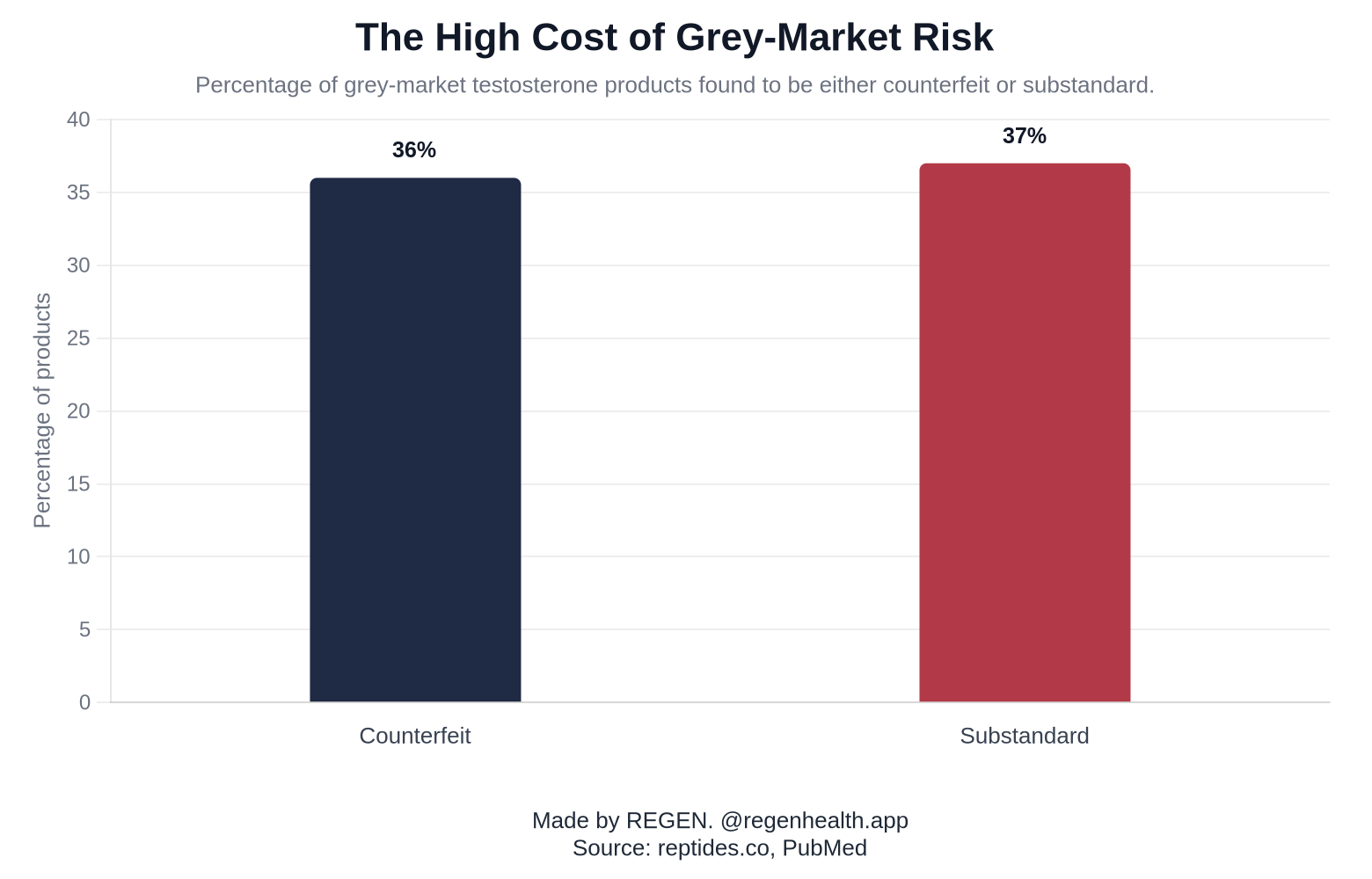
02 — Supraphysiologic dosing and muscular response
Administration of synthetic androgens in unverified doses produces measurable but potentially hazardous physiological changes. Research analyzing the effects of supraphysiologic doses of testosterone on muscle size and strength in normal men demonstrates that excessive androgen levels force hypertrophic adaptations while completely suppressing natural gonadotropin release. This suppression leads directly to a state of profound hypogonadism once the exogenous compound is removed from the system.
In controlled medical settings, exogenous hormones are administered with precise pharmacokinetic tracking to maintain stable serum levels. In stark contrast, grey-market testosterone products provide completely unknown quantities of active ingredients, making it impossible for clinicians to predict the exact peak and trough levels in the bloodstream. This erratic dosing profile significantly increases the risk of severe cardiovascular and metabolic adverse events.
03 — Clinical trials versus supplement claims
Legitimate testosterone replacement therapy relies on rigorous long-term studies to establish strict safety and efficacy parameters. Major clinical investigations, such as Beyond T-Trials, T4DM and TRAVERSE: the next large testosterone randomized controlled trial, provide the foundational data required to understand how hormone modulation affects cardiovascular risk and prostate health over time. These verified trials require continuous, exact monitoring of serum biomarkers to ensure patient safety.
Prohormone products avoid this essential clinical scrutiny entirely. The complete lack of randomized controlled trials for 1-testosterone means there is no established safety data regarding its long-term impact on lipid profiles, myocardial infarction rates, or stroke risk. Endocrine health cannot be accurately assessed or managed using unverified products that completely lack a documented side-effect profile or verifiable chemical provenance.
04 — Validated pathways for hormone regulation
Clinically validated protocols prioritize measurable hormonal stabilization over the acute aesthetic changes promised by unregulated supplements. For specific endocrine disruptions, targeted interventions demonstrate verifiable success in rigorously controlled human trials. A comprehensive meta-analysis concluded that inositol is an effective and safe treatment in polycystic ovary syndrome: a systematic review and meta-analysis of randomized controlled trials.
Such targeted medical approaches aim to restore natural hormonal signaling cascades rather than overwhelming the endocrine system with unapproved synthetic androgens. Tracking baseline bloodwork and subsequent metabolic changes allows clinicians to make precise therapeutic adjustments based on individualized physiological responses, ensuring that hormonal balance is achieved safely.
05 — Metabolic therapies and endocrine function
Emerging therapies for metabolic disorders demonstrate how precise pharmaceutical interventions can safely regulate complex endocrine pathways. Recent data highlights the efficacy and safety of GLP-1 agonists in PCOS women living with obesity in promoting weight loss and hormonal regulation: A meta-analysis of randomized controlled trials. These verified mechanisms offer a stark contrast to the unpredictable blunt force of unregulated grey-market prohormones.
Understanding the absorption and systemic distribution of these validated treatments is critical for their accurate clinical application. Researchers studying Orforglipron: Oral GLP-1 Small Molecule Dynamics have documented how specific molecular structures can achieve highly consistent therapeutic blood levels without the severe volatility typically seen in unverified supplement formulations.
06 — Unregulated compounds and systemic immunity
The introduction of unregulated synthetic androgens into the human body can provoke unpredictable and severe inflammatory and immune responses. Contaminants frequently found in grey-market products often trigger localized adverse reactions at the administration site or initiate broader systemic inflammation throughout the body. Verifying the absolute chemical purity of any compound introduced into the biological system is a fundamental requirement of modern clinical safety.
Legitimate clinical research closely monitors how exogenous substances interact with the complex immune system. Studies comparing Thymosin Alpha-1 vs. TB-500: Mechanism and Application highlight the strict cellular measurement required to understand peptide and hormone interactions with specific immune receptors, a level of scientific precision completely absent in the illicit prohormone market.
FAQ
What is the #1 testosterone booster?
No FDA-approved dietary supplement can medically increase testosterone levels. Clinical guidelines recommend pharmaceutical-grade testosterone replacement therapy exclusively for patients with diagnosed hypogonadism based on validated serum testing.
Is Hi-Tech Pharmaceuticals safe?
Products containing 1-testosterone operate in a regulatory grey area as dietary supplements containing synthetic prohormones. They lack FDA approval for human use and carry documented risks of endocrine disruption and hepatic strain.
What does Joe Rogan use for TRT?
Public figures utilizing hormone optimization typically rely on physician-prescribed, pharmaceutical-grade testosterone replacement therapy combined with regular blood monitoring, avoiding unregulated over-the-counter prohormone formulations entirely.
What does elevated testosterone icd-10 mean?
The ICD-10 code for elevated testosterone or hyperandrogenism is typically E28.1 for females, indicating an excess of circulating androgens that requires clinical evaluation and targeted endocrine management.