GLP-1 Tirzepatide Data: Retaining Lean Muscle Mass
GLP-1 and GIP receptor agonists induce substantial scale weight reductions, but a significant portion of this weight comes from fat-free mass rather than adipose tissue. Clinical data indicates that patients can lose approximately 6 kilograms of lean tissue during pharmacotherapy, presenting a severe risk to long-term metabolic health without concurrent physical intervention.
01 — Reality of lean mass reduction
In clinical populations utilizing these specific medications for targeted weight management, metabolic studies demonstrate that GLP-1 and GIP receptor agonists can induce 15-24% total weight loss, but also cause rapid loss of lean mass, approximately 10% or 6 kg.
The acceleration of weight reduction consistently outpaces the body's natural muscle-sparing mechanisms. This reduction in metabolically active tissue presents a specific clinical challenge, as skeletal muscle determines resting metabolic rate and physical functioning.
In populations utilizing these compounds, the decrease in lean mass occurs concurrently with fat reduction from the very first weeks of administration.
02 — Tirzepatide versus semaglutide
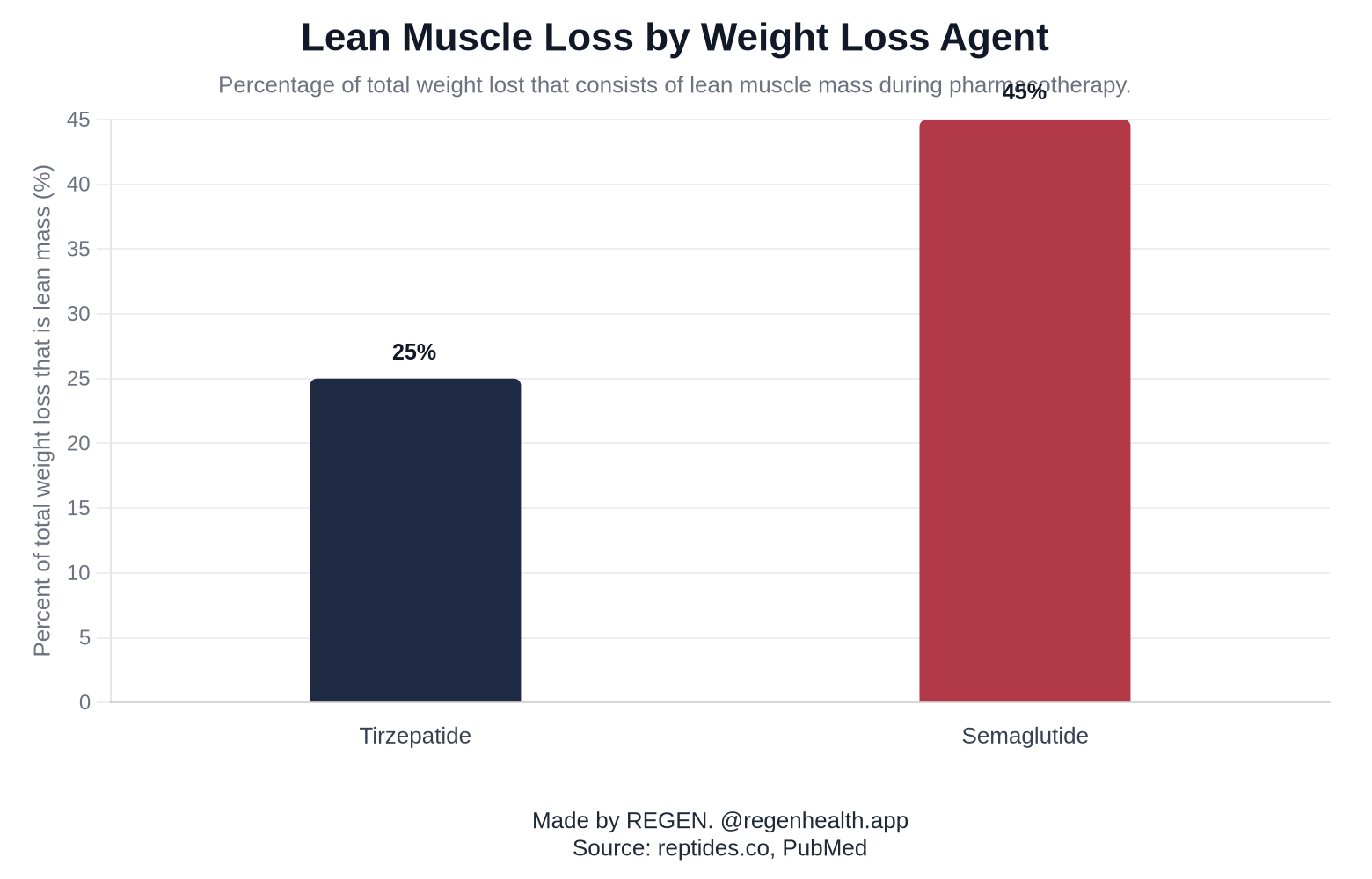
When researchers examine dual-energy X-ray absorptiometry outcomes across different clinical trials, data confirms that weight loss composition varies by medication, with approximately 45% of weight lost from semaglutide and 25% of weight lost from tirzepatide coming from lean mass.
The addition of GIP agonism in tirzepatide alters the metabolic response, yielding a different tissue reduction profile than single GLP-1 receptor agonists like semaglutide.
This distinct mechanism influences how adipose tissue is mobilized relative to skeletal muscle catabolism during the active weight reduction phase.
03 — Risk of sarcopenic obesity
According to comprehensive long-term metabolic evaluations of adult patient populations undergoing active weight management, clinical data indicates that over 25% of total weight lost from GLP-1/GIP pharmacotherapy and bariatric surgery comes from fat-free mass, potentially leading to sarcopenic obesity.
Sarcopenic obesity manifests when a patient retains excessive adipose tissue while simultaneously displaying dangerously low skeletal muscle mass, a state that severely compromises metabolic flexibility.
When patients lose this much skeletal muscle concurrently with fat, their basal metabolic rate drops precipitously, complicating weight maintenance after medication cessation.
04 — Resistance training interventions
In order to counteract the significant muscle tissue decay consistently observed during clinical pharmacotherapy, specific exercise protocols indicate that supervised resistance exercise training interventions longer than 10 weeks can elicit increases in lean mass of approximately 3 kg and strength of 25%.
This mechanical loading is necessary to offset the rapid skeletal muscle breakdown initiated by severe caloric deficits and receptor activation.
Without strict adherence to supervised resistance parameters that span at least two and a half months, patients fail to accrue the necessary hypertrophic adaptations to compensate for the average 6-kilogram loss in lean mass.
05 — Secondary behavioral observations
Beyond primary body composition changes and weight reduction metrics, clinical investigators are actively tracking broader systemic behavioral effects in patient cohorts, leading to the publication of detailed analytical papers examining GLP-1 receptor agonists and alcohol use disorder: a systematic review.
These secondary clinical outcomes suggest the receptor pathways mediate central reward and behavioral circuits in addition to their peripheral actions on gastric emptying and insulin secretion.
Researchers evaluating next-generation peptides often compare these neurological and behavioral shifts against Retatrutide Clinical Safety and Metabolic Outcomes to accurately map the full physiological spectrum of incretin therapies.
FAQ
What does taking tirzepatide do to your body?
In clinical populations, tirzepatide reduces total body weight by activating GLP-1 and GIP receptors, which delays gastric emptying and alters insulin secretion. This dual agonism mobilizes adipose tissue but also triggers a distinct reduction in skeletal muscle mass.
What's the difference between GLP-1 and tirzepatide?
GLP-1 medications like semaglutide target a single receptor pathway, whereas tirzepatide acts as a dual agonist that binds to both GLP-1 and GIP receptors. Clinical data shows this structural difference changes the resulting body composition, with tirzepatide resulting in a 25% lean mass loss compared to semaglutide's 45% lean mass loss.
Is tirzepatide hard on your body?
Clinical trials document gastrointestinal side effects and a rapid loss of metabolically active lean muscle mass alongside fat reduction. This significant skeletal muscle decay lowers resting metabolic rate, forcing patients to adopt rigorous mechanical loading protocols to maintain physical function.
What not to do on tirzepatide?
Published protocols indicate patients should avoid relying solely on extreme calorie deficits without structured resistance training. Failing to engage in supervised physical loading exacerbates the rapid loss of lean skeletal muscle tissue, pushing treated individuals closer to sarcopenic obesity.